
Intellectual property (IP) is a critical asset for businesses of all types. Among the various forms of IP, patents and copyrights are often confused. Understanding patents vs copyrights is essential for business owners to ensure their innovations and creative works receive the proper legal protection. This article breaks down the main differences between patents and copyrights in clear terms, covering what each protects, how you obtain rights, their duration, and more. We’ll also briefly discuss trademarks (including service marks) and how they differ. The following table summarizes the information in this article.
The table below compares the key differences of patents vs. copyrights:
| Aspect | Patent (for Inventions) | Copyright (for Creative Works) |
|---|---|---|
| Subject Matter Protected | New, useful, and non-obvious inventions: processes, machines, chemical compositions, manufactured articles, or new and useful improvements to existing technologies. Includes functional and technical innovations (utility patents) and ornamental designs of articles (design patents). | Original works of authorship: e.g. literary works, music, motion pictures and other audiovisual works, sound recordings, software code, and art that are fixed in a tangible medium. Essentially, expressive creative works in tangible form (text, images, audio, etc.), not ideas or processes themselves. |
| Examples | A new machine or device; a new drug formula; a new and useful process for manufacturing; a functional invention like a software algorithm that improves computer performance; the unique ornamental design of a product. | A novel or article; a marketing brochure; a logo design or photo; a piece of music or video your company produced; computer programs (code); motion pictures or sound recordings; any original works of authorship (documents, artwork, etc.). |
| Requirements for Protection | Invention must be novel, useful, and non-obvious. Patent is granted only after formal examination by USPTO to ensure these criteria are met. Must be patent-eligible subject matter. Public disclosure before filing can forfeit rights. | Work must be original (independently created with a minimal level of creativity) and fixed in a tangible medium. Uniqueness or novelty is not required: two people can independently create identical works and each have copyright. The work cannot be merely an idea or procedure, it must be the expression of ideas. Examination limited to formal requirements and a minimum level of creative expression. |
| How Rights Are Obtained | By filing a patent application and successfully passing USPTO examination. The process involves filing a formal patent application and patent examination taking 1-3+ years. A patent is granted by the government, and no patent rights exist until issuance. | Automatically upon creation of the work in tangible form: “copyright protection subsists … in original works of authorship fixed in any tangible medium”. Registration with the U.S. Copyright Office is optional, but recommended for legal benefits. No government approval needed to have a copyright, it exists from creation of the work. But, registration is required to enforce in court. |
| Duration of Protection | Generally 20 years from filing for utility and plant patents; 15 years from grant for design patents. No extensions beyond the patent term. Maintenance fees must be paid at intervals to keep a utility patent in force. No maintenance fees for design or plant patents. | For individual authors: Life of the author + 70 years after death. For corporate/anonymous works: 95 years from first publication or 120 years from creation, whichever expires first. Long duration, and no maintenance fees or renewals required under current law. |
| Scope and Territoriality | Patent rights are territorial. A United States patent only gives rights within the U.S. To protect an invention in other countries, patents must be obtained in each desired country via foreign filings, and/or the Patent Cooperation Treaty process. | Copyright is also territorial in enforcement. Each country has its own copyright law, but international treaties ensure that most countries recognize basic copyright for foreign works. U.S. copyright protects against unauthorized use in the U.S. Generally, however, creative works are automatically protected internationally to an extent via treaties like the Berne Convention, without needing separate filings in every country. |
| Exclusive Rights Granted | Patent owner’s rights: the exclusive right to exclude others from making, using, selling, or importing the patented invention. In essence, a patent gives a monopoly on the invention’s commercial exploitation for the patent term. The patent holder can license these rights or sue infringers. | Copyright owner’s rights: the exclusive rights to reproduce the work, create derivative works, distribute copies, perform the work publicly, and display the work publicly, and for sound recordings, to perform via digital audio. The copyright owner can authorize others (license) or enforce these rights against infringers. |
| Enforcement & Remedies | Enforced by patent infringement lawsuits in federal court. Remedies include injunctions and monetary damages. Willful infringement can lead to enhanced damages. No criminal penalties for patent infringement. | Enforced by copyright infringement lawsuits (registration required) in federal court. Remedies include injunctions, actual damages or statutory damages, and possibly attorney’s fees. Willful large-scale infringement (e.g. piracy) can also carry criminal charges. Copyright law has defenses like fair use that may excuse certain infringements. |
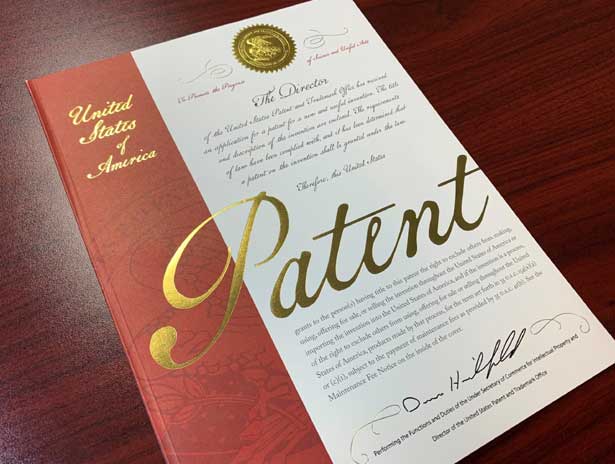
A patent is a form of intellectual property that protects inventions. In the United States, patent law is governed by federal statute (Title 35 of the U.S. Code) and administered by the U.S. Patent and Trademark Office (USPTO). A patent can be granted for any new and useful process, machine, manufacture, or composition of matter, or any new and useful improvement thereof. Patents encourage inventors to publicly disclose their inventions in exchange for certain exclusive rights.
There are three main types of patents under U.S. law, each protecting a different category of invention:
Patents protect inventions by granting the patent holder an exclusive right to profit from the invention for a limited time. In practice, a patent is a government-granted monopoly that allows the patent owner to exclude others from making, using, selling, or importing the patented invention without permission. For instance, if you obtain a patent for a new and useful process or machine, you can stop competitors from using that same process or selling a product using your patented invention. This exclusive right provides a competitive advantage and an opportunity to recoup R&D investments. However, the invention must be fully disclosed in the patent application, which becomes public. After the patent expires, the public is free to use the invention. The trade-off of the patent system is disclosure in exchange for temporary exclusivity.
A copyright is a form of intellectual property that protects original creative works of authorship. Copyright law is governed by federal statute (Title 17 of the U.S. Code) and, unlike patents, is administered by the U.S. Copyright Office. Copyright protection subsists automatically when an original work of authorship is fixed in a tangible medium of expression. In plainer terms, as soon as you create an original work and record it in some tangible form, such as writing it down, saving it as a computer file, etc., you have a copyright in that work. There is no requirement that the work be novel or unique; it just needs to be the author’s own original creation, independently created and not copied from others, and fixed in a tangible form. Unlike patents, copyright law does not require any inventive step or usefulness, it protects creativity rather than technical innovation.
Copyrights protect a broad range of creative and artistic works, often referred to as “original works of authorship”. The law explicitly lists categories of works that can be protected by copyright, including literary works, musical works and lyrics, dramatic works, choreographic works, pictorial/graphic/sculptural works, films and other audiovisual works (e.g. motion pictures), sound recordings, architectural works, and more. For instance, a software program’s code or a website’s written content can be protected by copyright as a literary work. Computer programs are expressly recognized in legislative history as copyrightable works. Likewise, a marketing video or training manual your business creates is protected by copyright as soon as it is created.
Importantly, copyright protects the expression of ideas, not the underlying ideas or functional concepts themselves. This principle, often called the idea–expression dichotomy, is codified in the Copyright Act: In no case does copyright protection for an original work of authorship extend to any idea, procedure, process, system, method of operation, concept, principle, or discovery. In other words, copyright can protect how an idea is expressed (the words, images, or music used), but cannot protect the idea. A famous case, Baker v. Selden, 101 U.S. 99 (1879), illustrates this point: the Supreme Court explained that a method or system described in a book is not protected by the book’s copyright. If exclusive rights to the method are desired, one must seek a patent. For example, if you write a book explaining a new chemical synthesis, your specific explanation and expression in the book are copyrighted, but the chemical synthesis method itself could only be protected by patent, not by copyright. This is a key difference: functional inventions or processes (including computer algorithms, industrial techniques, chemical formulas, etc.) are the realm of patent law, whereas creative expressions (text, visuals, audio, etc.) fall under copyright law.
When you own a copyright in a work, you hold a bundle of exclusive rights granted by law. These rights include the exclusive right to reproduce or copy the work, to prepare derivative works based on it (e.g. translations, adaptations, sequels), to distribute copies of the work to the public, and to perform or display the work publicly. For example, if your company created an original training video or software code, you, as the copyright owner, have the exclusive right to copy it, modify or update it, sell or license copies, and publicly show or perform it. No one else can lawfully do those things without your permission. These exclusive rights of the copyright owner are set forth in 17 U.S.C. § 106. By contrast, things that are not protectable by copyright (ideas, processes, facts) can often be freely used by others unless patented or kept secret.
It is worth noting that copyright arises automatically when the original work is created. No formal filing is required to have a copyright. However, as we discuss, registering the copyright with the U.S. Copyright Office provides important benefits and is required to enforce the copyright in court for U.S. works.
Obtaining a patent is a more complex process than obtaining a copyright. To get a patent, one must file a patent application with the USPTO and go through an examination process. The patent application is a detailed legal document that includes a detailed description of the invention, drawings, and a set of claims defining the legal scope of the invention. Preparing a strong patent application typically requires specialized knowledge. It is thus generally advisable to work with an experienced patent attorney for this process.
Often, a patentability search is conducted before filing to check for prior art that might anticipate the invention or render it obvious. Prior art can come from anywhere around the world. What matters is whether the prior art is sufficiently publicly accessible. It does not matter whether the prior art is in English or another language, or whether it has ever been made public in the US. Thus, a patentability search needs to be thorough and have a broad scope. A patent search limited to the records of the United States Patent and Trademark Office is insufficient.
The filing date of the patent application is very important: under the U.S. “first-to-file” system, generally the first inventor to file an application has priority to the patent. Inventors should also be careful about making any public disclosure of the invention before filing an application. Early disclosure can jeopardize patent rights. In the U.S. you have a one-year grace period to file after an inventor or applicant makes a public disclosure of their own invention, but in many countries any public disclosure before filing can bar you from getting a patent. Therefore, business owners should be careful to file a patent application or at least a provisional patent application before revealing an invention publicly or selling a product, to preserve patent rights.
During examination, the Patent Office ensures the invention meets all legal requirements: it must be patent-eligible subject matter - not a law of nature, abstract idea, or natural phenomenon; novel - not previously known or described; and non-obvious - not an obvious variation of what was already known. The application process involves significant filing fees and possibly months or years of prosecution of the application. The USPTO examiner will review whether the invention is truly new and non-obvious in light of existing patents, publications, or other publicly available knowledge, which is referred to as prior art. The examiner will issue one or more office actions providing the USPTO's opinion on whether the applied-for invention is patentable. If any rejections are issued based on the prior art or formal matters, you must respond to the rejections and overcome them with claim amendments and/or legal argument. Once all rejections are overcome, the examiner will allow the application to proceed as a patent and the patent will be granted. Once granted, the inventor becomes a patent holder (patent owner) and has enforceable patent rights as defined in the issued patent. It is important to note that a patent protects inventions only in the country where it is granted. A United States patent gives rights in the U.S. only. Separate patents must be obtained in other countries for international protection.
Copyright is much easier to obtain. Copyright protection is automatic from the moment an original work is created and fixed in a tangible form. There is no examination of the artistic merit or originality of your work by a government office. If it meets the basic criteria of originality and fixation, it is protected. This means if your business writes an original blog post, designs a marketing graphic, or records a training video, those works are copyrighted as soon as they are created and fixed in digital or physical form. No application or approval is needed to have a copyright.
However, while you have a copyright upon creation, U.S. law encourages creators to register their works with the U.S. Copyright Office. Copyright registration is a relatively simple process: it involves filling out a form, paying a fee, and depositing a copy of the work. The copyright office reviews the application for: (1) formal requirements - e.g., that the work is fixed in a tangible medium, it is in a proper category of copyright subject matter, and other formal requirements; and (2) a minimal level of creative expression. There is a limited examination process, if the reviewer notes any issues with regard to formalities (e.g., the work is not properly represented in the submission), or the reviewer does not perceive a minimum level of creative expression, the reviewer will issue a rejection letter. The applicant has the opportunity to respond with factual and legal arguments to the rejection letter. The applicant's letter will be considered by the reviewer in their final decision on registration. The review of the copyright application is limited to this exchange of letters, and is thus far less extensive than patent examination.
Because registration is a prerequisite to filing a copyright infringement lawsuit for works of U.S. origin, and it also enables the copyright owner to seek statutory damages and attorney’s fees in an infringement case, if the copyright application is filed in a timely manner. In short, registration strengthens your copyright enforcement but does not create the copyright. The copyright exists whether or not you register, though unregistered works have limited remedies. Fortunately, registering a copyright is a relatively inexpensive and short process compared to patenting. A copyright registration certificate can be issued within a few weeks or months.
In summary, obtaining a patent requires a formal application, examination, and grant by the government, whereas obtaining a copyright requires no approval, it’s automatically secured by the act of creation. The patent system is thus more complex and costly, reflecting the greater exclusivity and stronger monopoly granted.
Patents provide strong but relatively short-term protection. For utility patents and plant patents in the U.S., the standard term is 20 years from the application’s filing date. This term can sometimes be slightly adjusted for USPTO delays, but generally about two decades is the limit. Design patents have a shorter term. For U.S. design patent applications filed on or after May 13, 2015, the term is 15 years from the date of grant (design patents filed earlier last 14 years).
After a patent expires, the invention enters the public domain and can be used by anyone. Notably, patent rights cannot be extended indefinitely: once the term is over, the patent owner’s exclusivity ends. There are very limited exceptions, such as specific patent term extensions for certain pharmaceutical patents to compensate for FDA regulatory delays, but these are special cases.
Patent owners must also maintain their patents by paying periodic fees. In the U.S., maintenance fees are required for utility patents at 3.5, 7.5, and 11.5 years after grant to keep the patent in force. If a maintenance fee is not paid by the deadline, the patent expires early. These fees can be substantial, though small businesses and individual inventors often qualify for reduced small-entity or micro-entity fees. Design and plant patents are not subject to maintenance fees. Once granted, design and plant patents remain in force for their full term without additional payments.
Copyrights generally last much longer than patents. Under the current U.S. Copyright Act (for works created in or after 1978), a copyright in an individual work lasts for the life of the author plus 70 years after the author’s death. This means an individual creator’s works can be protected for several decades beyond their lifetime. In the case of works made for hire or anonymous works, the term is not based on a person’s life but instead is 95 years from publication or 120 years from creation, whichever comes first. Copyright applications are commonly filed anonymously by businesses for works created internally by the business. For example, if your company publishes an original training manual in 2025 as a work made for hire, the copyright would expire in 2120 (95 years from publication) unless it was not published, in which case it would expire 120 years from creation. These lengthy terms reflect the policy that creative works should eventually enter the public domain, but only after authors and their heirs have enjoyed a long period of exclusive rights.
Importantly, there is no requirement to file renewals or pay upkeep fees for copyright. Under past Copyright Acts, pre-1978 works had renewal formalities, but those have been phased out. Once a work is under copyright, it stays protected for its term as long as basic conditions are met. This means a business’s creative content can effectively be protected for generations, whereas patents protecting inventions will expire relatively early in comparison.
A patent grants the inventor the exclusive right to exclude others from exploiting the invention for the duration of the patent. Specifically, under 35 U.S.C. § 154, a patent confers the right to exclude others from making, using, offering for sale, or selling the patented invention in the United States, as well as importing it. This does not automatically give the patent owner the right to actually make or sell the invention. There could be other regulatory hurdles or overlapping patents, but a patent gives the right to stop others from doing so. In effect, a patent owner becomes the only one who can legally commercialize the invention or authorize others to do so.
For example, if your company holds a patent on a new and useful process for manufacturing, you can prevent competitors from using that process. If you patented a chemical composition (e.g., a new drug formulation), no one else can make or sell that composition without your permission during the patent term. Patent rights are enforced by filing patent infringement lawsuits in federal court against unauthorized users of the patented invention. Remedies for patent infringement can include money damages and injunctions (court orders to stop the infringing activity). Patent law does not require the owner to mark products with the patent number, but doing so can affect damages recovery. Marking puts the public on notice of the patent, eliminating the defense of innocent infringement. Also, once a patented product is sold by or with authorization of the patent owner, the patent rights are exhausted for that item, meaning the patent owner can’t control downstream resale or use of that particular item. This is analogous to the “first sale doctrine” in copyright.
A copyright grants a bundle of exclusive rights to the copyright owner, as defined in 17 U.S.C. § 106. These include the exclusive right to reproduce the work, prepare derivative works (adaptations) based on it, distribute copies of the work, perform the work publicly (for literary, musical, dramatic, and audiovisual works), display the work publicly (for literary, artistic, and pictorial works), and for sound recordings, to perform the work publicly by digital audio transmission. In everyday terms, if you own the copyright, you control copying, adaptation, distribution, performance, and display of your work. For instance, if your business created a promotional video, competitors cannot lawfully copy that video or play it publicly without permission. If you wrote original software code, others cannot copy or reuse that code in their products without your consent. Even clients cannot simply redistribute your business’s copyrighted report or training materials to the public without authorization, because that would violate your exclusive distribution right.
The copyright owner can license any of these rights to others: e.g., selling copies or broadcasting a performance. Copyright owners also have the right to authorize others to exercise these rights. Via copyright licensing you can contract with publishers, producers, and other parties to exploit the work on your behalf.
Enforcement of copyright is typically through infringement lawsuits in federal court. To sue for infringement of a U.S. work, the copyright must be registered with the Copyright Office. Remedies for copyright infringement can include injunctions, actual damages or statutory damages, and attorney’s fees. Statutory damages and attorney fees are available if application to register the copyrights is filed before the infringement occurs or within three months of the original publication of the work. Unlike patents, willful copyright infringement can lead to criminal penalties in egregious cases, such as large-scale piracy.
One limitation to note is the first sale doctrine under 17 U.S.C. § 109, which says once the copyright owner sells a particular copy of a work, the owner’s distribution right in that copy is exhausted. The purchaser can resell or give away the purchased copy without infringement. This is why, for example, used book sales are legal. However, making additional copies or public performances would still infringe if done without permission. Copyright law also has a fair use defense and other exceptions that allow limited use of copyrighted material without permission. The copyright fair use defense allows for the use of copyright materials under certain circumstances, such as criticism, commentary, education, and parody.
In summary, patents grant an exclusive right over functional inventions, allowing the patent owner to stop others from using the patented invention. Copyrights grant exclusive rights over creative works, allowing the owner to stop others from copying or exploiting the expression of the work. Both are powerful IP, but they apply to very different subject matter and have different enforcement mechanisms.
In discussing patents vs. copyright, it’s important not to overlook trademarks, which protect brand identifiers, a completely different aspect of intellectual property. A trademark is generally a word, name, logo, slogan, or other symbol that identifies the source of goods or services and distinguishes them from others. If it identifies services rather than goods, it’s specifically called a service mark, but the term “trademark” is often used broadly to include service marks. Examples include brand names like a company name or product name, logos, and taglines. For instance, your business name and logo can function as trademarks. Trademark rights, unlike patents and copyrights, are about consumer recognition and goodwill. Trademarks prevent others from using confusingly similar marks in commerce, thereby protecting your brand reputation.
Key points about trademarks for business owners:
In summary, trademarks safeguard your business’s identity in the marketplace, whereas patents and copyrights protect your business’s innovations and creations. All three are administered at the federal level: patents and trademarks through the United States Patent and Trademark Office, and copyrights through the U.S. Copyright Office. Each addresses a different facet of intellectual property.
A key takeaway is to understand what intellectual assets you may have and match them to the correct type of IP protection. If you have invented a valuable new process or product, you should consider patent protection. If you’ve created valuable original content or software, you should register the corresponding copyrights. By understanding the key differences and the exclusive rights each form of IP provides, you can make informed decisions and invest in the appropriate protections for your valuable creations. Understanding is first step. It is recommended that you seek the assistance of a patent attorney and/or copyright attorney to evaluate whether you should pursue patents and/or copyright registrations.
With the right protections in place, you gain exclusive rights that can secure a competitive advantage, and add significant value to your company’s portfolio. If you have an invention or creative work that you want to protect, contact our office for a free consultation.
© 2025 Sierra IP Law, PC. The information provided herein does not constitute legal advice, but merely conveys general information that may be beneficial to the public, and should not be viewed as a substitute for legal consultation in a particular case.

"Mark and William are stellar in the capabilities, work ethic, character, knowledge, responsiveness, and quality of work. Hubby and I are incredibly grateful for them as they've done a phenomenal job working tirelessly over a time span of at least five years on a series of patents for hubby. Grateful that Fresno has such amazing patent attorneys! They're second to none and they never disappoint. Thank you, Mark, William, and your entire team!!"
Linda Guzman


Sierra IP Law, PC - Patents, Trademarks & Copyrights
FRESNO
7030 N. Fruit Ave.
Suite 110
Fresno, CA 93711
(559) 436-3800 | phone
BAKERSFIELD
1925 G. Street
Bakersfield, CA 93301
(661) 200-7724 | phone
SAN LUIS OBISPO
956 Walnut Street, 2nd Floor
San Luis Obispo, CA 93401
(805) 275-0943 | phone

SACRAMENTO
180 Promenade Circle, Suite 300
Sacramento, CA 95834
(916) 209-8525 | phone
MODESTO
1300 10th St., Suite F.
Modesto, CA 95345
(209) 286-0069 | phone
SANTA BARBARA
414 Olive Street
Santa Barbara, CA 93101
(805) 275-0943 | phone
SAN MATEO
1650 Borel Place, Suite 216
San Mateo, CA, CA 94402
(650) 398-1644. | phone
STOCKTON
110 N. San Joaquin St., 2nd Floor
Stockton, CA 95202
(209) 286-0069 | phone
PORTLAND
425 NW 10th Ave., Suite 200
Portland, OR 97209
(503) 343-9983 | phone
TACOMA
1201 Pacific Avenue, Suite 600
Tacoma, WA 98402
(253) 345-1545 | phone
KENNEWICK
1030 N Center Pkwy Suite N196
Kennewick, WA 99336
(509) 255-3442 | phone
2023 Sierra IP Law, PC - Patents, Trademarks & Copyrights - All Rights Reserved - Sitemap Privacy Lawyer Fresno, CA - Trademark Lawyer Modesto CA - Patent Lawyer Bakersfield, CA - Trademark Lawyer Bakersfield, CA - Patent Lawyer San Luis Obispo, CA - Trademark Lawyer San Luis Obispo, CA - Trademark Infringement Lawyer Tacoma WA - Internet Lawyer Bakersfield, CA - Trademark Lawyer Sacramento, CA - Patent Lawyer Sacramento, CA - Trademark Infringement Lawyer Sacrament CA - Patent Lawyer Tacoma WA - Intellectual Property Lawyer Tacoma WA - Trademark lawyer Tacoma WA - Portland Patent Attorney - Santa Barbara Patent Attorney - Santa Barbara Trademark Attorney
